Manufacturing
Internal Tool
8 weeks pilot + 4 weeks expansion
Manufacturing QC System Reduces Defects 67%
Mountain View Manufacturing
Executive Summary
A mid-size precision parts manufacturer needed real-time quality control tracking to reduce defect rates and improve traceability. We built a custom QC system that connects shop floor inspections to production data, reducing scrap by 67% and improving first-pass yield.
Results
67% reduction
Defect Rate
From 4.2% to 1.4% defect rate across all lines
23% improvement
First Pass Yield
More parts passing inspection on first attempt
$180K/year
Scrap Cost Savings
Reduction in scrapped material and rework labor
95% faster
Time to Detection
Defect trends identified in hours instead of weeks
Defect Rate
Before
Before
Manual
After
67% reduction
From 4.2% to 1.4% defect rate across all lines
See full results in this case study
The Problem
Quality inspectors were recording measurements in paper logs, making it impossible to identify trends or catch problems early. Defects were often discovered at final inspection—too late to prevent costly rework. Management had no real-time visibility into quality metrics across production lines.
Project Constraints
- Budget: $28K
- Timeline: 8 weeks to pilot on one production line
- Integration: Must connect to existing MES system
- Environment: Shop floor tablets in dusty/industrial conditions
- Training: Minimal—inspectors not tech-savvy
The Approach
We started with a 1-week process mapping exercise on the shop floor to understand inspection workflows and pain points. After identifying the 3 most critical inspection points, we built a mobile-first tablet interface optimized for gloved hands and bright shop floor lighting. Pilot deployment on one line validated the approach before expanding across all 5 production lines.
The Solution
A progressive web app for tablet-based quality inspections with real-time alerts when measurements fall outside tolerances. Auto-capture of production lot numbers via barcode scanning. Statistical process control (SPC) charts for trend analysis. Integration with existing MES to tie quality data to production batches. Manager dashboard showing real-time defect rates and pareto analysis of root causes.
Technical Architecture
React PWA for offline-capable shop floor data entry. PostgreSQL with time-series optimizations for measurement storage. REST API integration with existing MES. Redis pub/sub for real-time alerting to supervisors. Nightly ETL pipeline exports to data warehouse for long-term trend analysis.
Stack & Integrations
React
PostgreSQL
Node.js
Redis
PWA
REST API
Timeline
8 weeks pilot + 4 weeks expansion
Implementation Highlights
- 5 core constraints addressed without scope creep
- 6+ technologies integrated
- Delivered in 8 weeks pilot + 4 weeks expansion
- Primary performance outcome: 67% reduction
Before vs After
From Manual to Automated
Manual Process
- 1Inspector measures part with caliper and records on paper form
- 2Form filed in binder at end of shift
- 3Weekly QC review aggregates paper forms manually
- 4Trend analysis done monthly in Excel
- 5Problems discovered after hundreds of parts already produced
Automated System
- 1Inspector scans production lot barcode on tablet
- 2Enters measurements directly into web app
- 3Instant alert if measurement out of tolerance
- 4Supervisor sees real-time SPC chart and investigates immediately
- 5Root cause identified and corrected within hours
TransformationTime Saved · Errors Eliminated · Control Gained
Screenshots
Tablet Inspection Interface
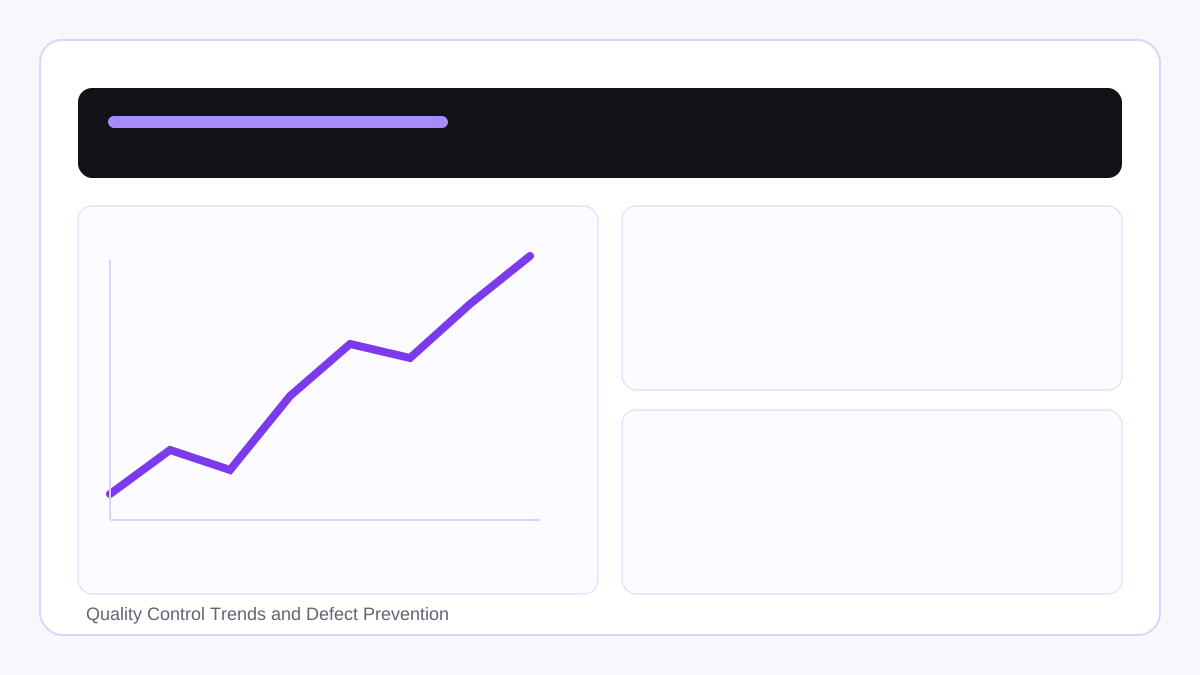
Designed for gloved hands and bright lighting—critical for shop floor adoption
Real-Time SPC Dashboard
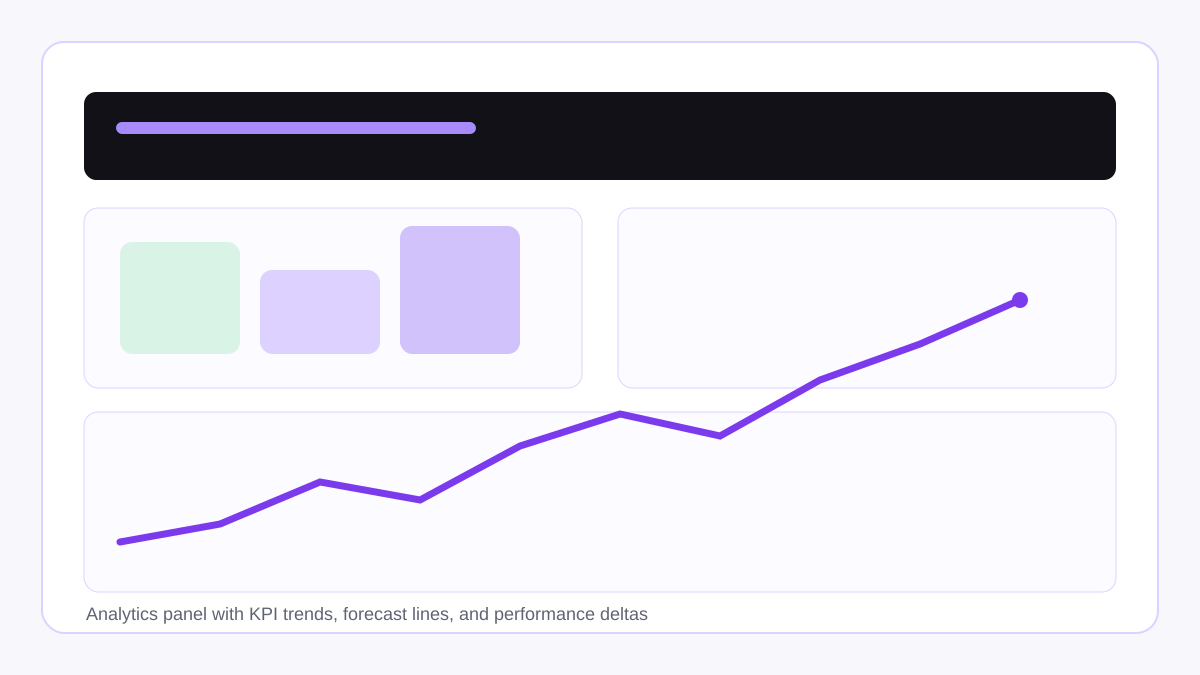
Supervisors can spot trends before defects occur
Quality Metrics Executive View
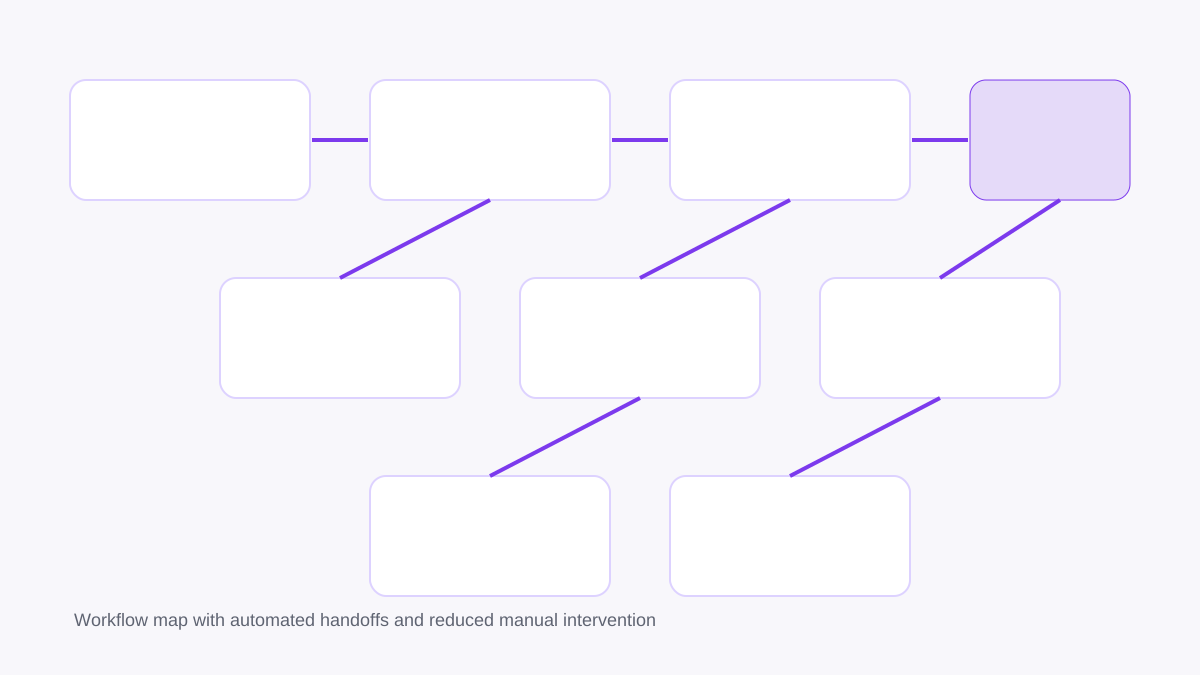
Leadership visibility into quality performance by line and shift
"
The QC system has transformed our quality culture. Inspectors love the tablets, and supervisors can catch problems before we waste expensive material. ROI was proven in 4 months.
Jennifer Martinez
Director of Operations
More Success Stories
See how we've helped other businesses eliminate operational bottlenecks
Energy Management
SaaS Platform Generates $50K+ ARR in Year One
An innovative energy services company needed a custom SaaS platform to track and manage field operations across multiple client sites. We built SheetsTracker, a multi-tenant platform that now serves 15+ clients and processes 10,000+ data points monthly.
$50K+ ARR
80% faster
Construction
Operations Dashboard Reduces Invoice Delays by 60%
A growing construction firm was drowning in spreadsheets and struggling to track project costs. We built a centralized operations dashboard that eliminated manual tracking and provided real-time financial visibility.
60% faster
85% reduction
Framework
Want to Calculate Your Own Automation ROI?
Learn our proven framework for identifying, prioritizing, and implementing high-ROI automation opportunities with our complete 6,000-word guide.
Start Your Project Today
Let's discuss how we can deliver similar results for your business. Schedule a Strategy Session to explore possibilities.