Logistics & Warehousing
Customer Portal
6 weeks
Maintenance Portal Cuts Response Time by 70%
Industrial Warehouse Operator
Executive Summary
A warehouse operator was managing equipment maintenance through email and phone calls, leading to slow response times and poor accountability. We built a maintenance request portal with automated routing and KPI tracking.
Results
70% faster
Average Response Time
From 8 hours to 2.4 hours average
Zero
Lost Requests
Complete tracking and accountability
35% reduction
Equipment Downtime
Faster response reduced downtime costs
Improved
Maintenance Planning
Historical data enabled preventive maintenance
Average Response Time
Before
Before
Manual
After
70% faster
From 8 hours to 2.4 hours average
See full results in this case study
The Problem
Equipment breakdowns were reported via email or phone calls to a shared inbox. Requests were frequently lost, response times averaged 8+ hours, and there was no way to track maintenance history or performance. The lack of accountability was causing costly downtime.
Project Constraints
- Maintenance team has varying tech comfort levels (some prefer paper)
- Must work on tablets and smartphones in warehouse environment
- 6-week timeline before busy season starts
- Budget: $22,000
- Integration with existing asset tracking spreadsheet required
The Approach
We spent 2 days shadowing warehouse staff and the maintenance team to understand the actual workflow, not just what was described in meetings. We discovered that maintenance techs valued photos of issues more than text descriptions, and that many request submissions happened during walkthroughs, not from desks. This led us to design a mobile-first interface with a camera-first submission flow and QR codes on equipment for instant reporting.
The Solution
We created a maintenance request portal that allowed warehouse staff to submit requests with photos, automatic prioritization by equipment type, and real-time status tracking. The maintenance team got a dashboard showing all open requests, SLA timers, and performance metrics. The system sent automated notifications and escalations.
Technical Architecture
React SPA with offline-capable PWA features for warehouse areas with spotty WiFi, Node.js backend with REST API, MongoDB for flexible request schema and fast queries, Twilio for SMS notifications to maintenance team and email escalations, AWS S3 for photo storage with automatic compression, CloudFront CDN for fast image loading. Implemented a service worker for offline request submission with auto-sync when connection restored.
Stack & Integrations
React
Node.js
MongoDB
Twilio
AWS
Timeline
6 weeks
Implementation Highlights
- 5 core constraints addressed without scope creep
- 5+ technologies integrated
- Delivered in 6 weeks
- Primary performance outcome: 70% faster
Before vs After
From Manual to Automated
Manual Process
- 1Worker notices broken equipment during shift
- 2Worker tells supervisor or emails maintenance inbox
- 3Supervisor relays message to maintenance team (if remembered)
- 4Maintenance team checks inbox periodically
- 5Technician eventually assigned but no prioritization system
- 6No visibility for worker who reported the issue
- 7No tracking of response times or completion
Automated System
- 1Worker scans QR code on equipment with smartphone
- 2Takes photo of issue and submits with one button
- 3System automatically prioritizes based on equipment type
- 4Maintenance team receives instant SMS notification
- 5Technician accepts assignment from mobile device
- 6Worker gets automatic status updates
- 7All requests tracked with full history and metrics
TransformationTime Saved · Errors Eliminated · Control Gained
Screenshots
Mobile Request Submission
Warehouse staff can report issues in under 30 seconds using their smartphones
Maintenance Team Dashboard
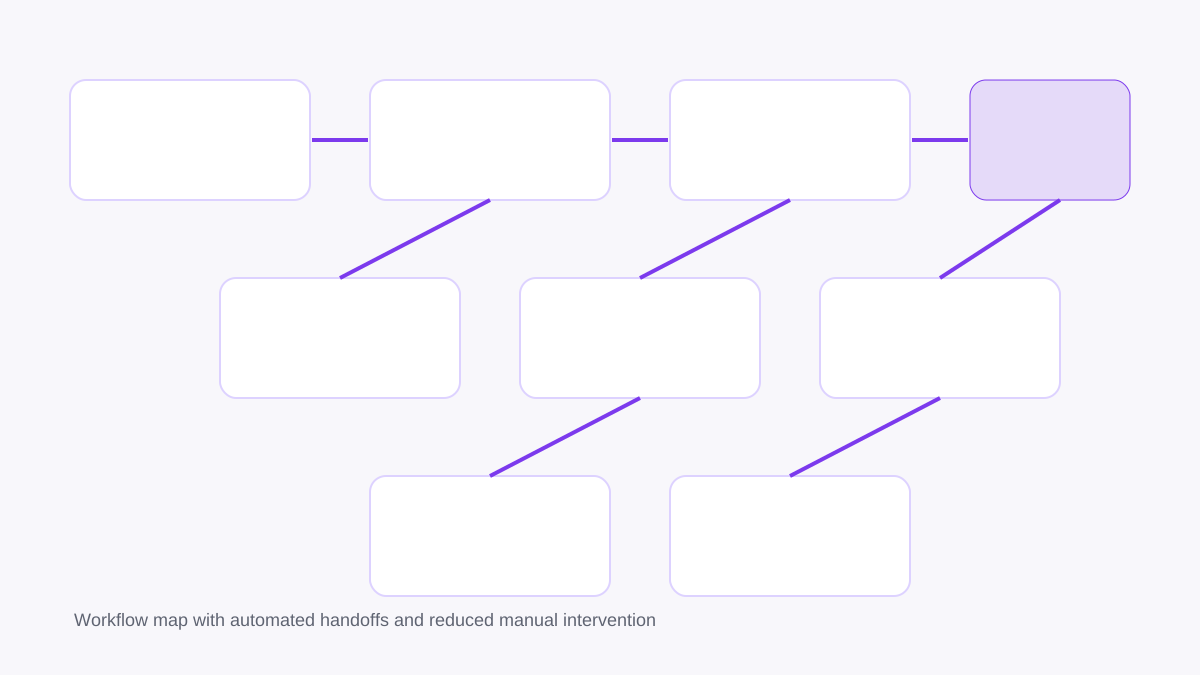
Real-time view of all pending maintenance requests with color-coded urgency
Performance Analytics
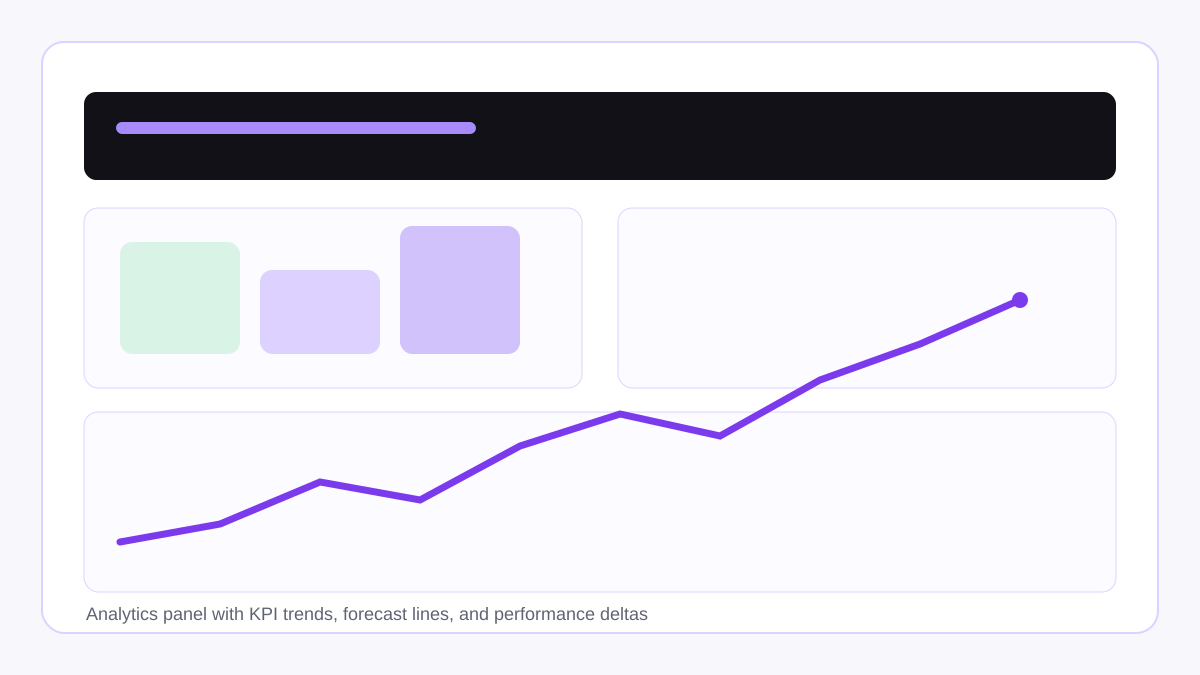
Data-driven insights for preventive maintenance planning and team management
"
The portal transformed our maintenance operations. We now have full visibility, accountability, and the data we need to prevent issues before they happen.
Sarah Johnson
Warehouse Operations Director
More Success Stories
See how we've helped other businesses eliminate operational bottlenecks
Energy Management
SaaS Platform Generates $50K+ ARR in Year One
An innovative energy services company needed a custom SaaS platform to track and manage field operations across multiple client sites. We built SheetsTracker, a multi-tenant platform that now serves 15+ clients and processes 10,000+ data points monthly.
$50K+ ARR
80% faster
Construction
Operations Dashboard Reduces Invoice Delays by 60%
A growing construction firm was drowning in spreadsheets and struggling to track project costs. We built a centralized operations dashboard that eliminated manual tracking and provided real-time financial visibility.
60% faster
85% reduction
Framework
Want to Calculate Your Own Automation ROI?
Learn our proven framework for identifying, prioritizing, and implementing high-ROI automation opportunities with our complete 6,000-word guide.
Start Your Project Today
Let's discuss how we can deliver similar results for your business. Schedule a Strategy Session to explore possibilities.